

In 1942, a film studio took a chainsaw to Orson Welles’ second movie, chopped out 43 minutes of footage, and likely melted the negatives to recover the silver nitrate. That footage is gone. Physically, chemically, and historically, it does not exist. But a San Francisco startup is now betting that with enough processing power, “gone” is just a temporary state of affairs. They are attempting to resurrect the lost scenes of The Magnificent Ambersons not by finding them, but by manufacturing them from scratch.
Key Takeaways
- Startup Fable is using generative AI to recreate 43 minutes of lost film footage.
- The project overlays live-action scenes with digital recreations of original actors and voices.
- Biographer Simon Callow and filmmaker Brian Rose are advising or collaborating on the project.
The company, Fable, is run by Edward Saatchi, who views this lost footage as the “holy grail” of cinema. Welles himself claimed the original cut was better than Citizen Kane before the studio panicked after a bad preview screening, hacked it apart, and tacked on a happy ending. Saatchi’s team is now trying to undo that edit 80 years later.
This isn’t just a solo tech experiment. Fable has brought in filmmaker Brian Rose, who spent years trying to animate the lost scenes by hand, and Simon Callow, a biographer of Welles. They are attempting to build a hybrid film that stitches the surviving 1942 footage with 2024 AI generations.
The big deal
This project forces a confrontation between preservation and fabrication. For decades, film restoration meant cleaning up dirt on a negative or fixing color timing. This is different. It is the creation of a new performance by a dead actor. If Fable succeeds, they aren’t just restoring a movie; they are proving that AI can convincingly ghost-write cinema history.
The cultural stakes are high. The Magnificent Ambersons is a masterpiece that was vandalized by its own studio. Fixing it is a dream for cinephiles, but doing it with software raises the question of whether we are watching Orson Welles’ vision or a computer’s best guess. It blurs the line between a restoration and a high-budget fan fiction.
How it works
Fable does not simply type a prompt into a computer and wait for a movie to pop out. The process is a complex mix of traditional filmmaking and digital overlay.
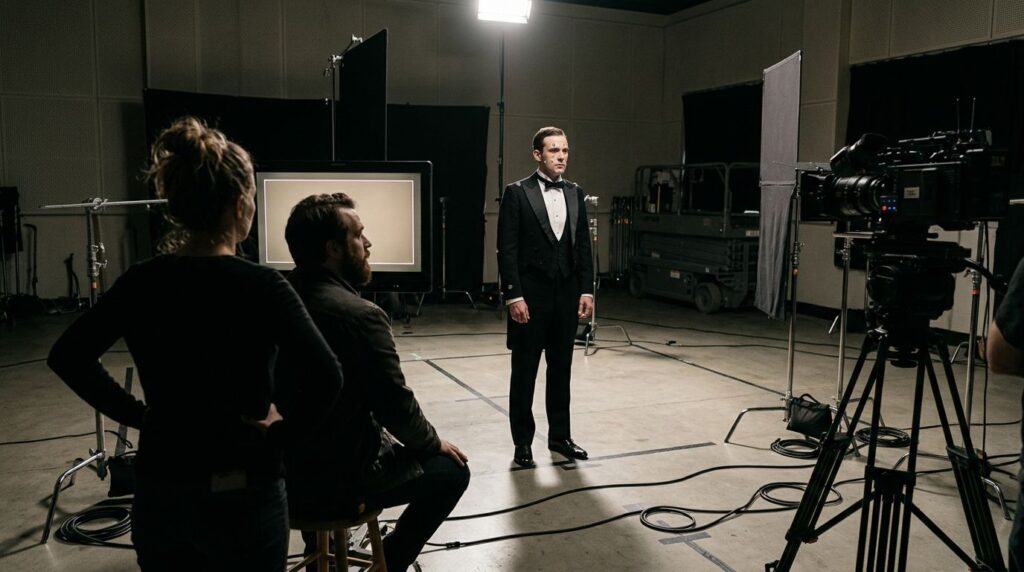
Think of it like rotoscoping, or tracing over a live video. First, the team films real, living actors performing the lost scenes on a set. These actors provide the movement, the pacing, and the physical presence. Then, the AI acts as a digital costume department. It paints over the modern actors, replacing their faces and voices with the likenesses of the original 1942 cast, frame by frame.
The AI uses the existing footage of the actors to learn their faces, lighting, and mannerisms, then applies that data to the new footage.
The catch
The technology is fighting against reality. The AI struggles with the specific, high-contrast lighting Welles was famous for. It also hallucinates. Early tests produced glitches like two-headed actors. More strangely, the AI has a “happiness” bias—it keeps trying to make the female characters smile, which clashes with the somber tone of the film.
There is also a massive legal and ethical wall. Warner Bros. owns the rights to the film, and Fable did not secure permission from the studio or the Welles estate before announcing the project. While Welles’ daughter Beatrice has expressed cautious optimism about the respect they are showing, others are less convinced. Melissa Galt, daughter of original actress Anne Baxter, called the project “not the truth” and suggested her mother would have hated it.
What now?
Fable is currently trying to win over the rights holders. Saatchi admits it was a mistake not to approach the estate sooner and is now working to get Warner Bros. on board. Without their sign-off, this footage cannot be commercially released.
If you are a film purist, this is likely either your dream scenario or your nightmare. Watch to see if Warner Bros. grants a license; their decision will set a precedent for who gets to rewrite the history of other broken films.