The signal-to-noise ratio in my inbox shifted this week. For the last eighteen months, the noise was deafening: a relentless barrage of model launches, funding announcements, and breathless threads declaring the end of traditional software. This week, the volume dropped. The frantic energy of the early gold rush has been replaced by a strange, heavy quiet. You can feel it in the investor updates and the product roadmaps. The mood isn’t pessimistic, exactly, but it is hesitant. The manic optimism has evaporated, leaving behind a stark, uncomfortable reality that nobody wants to be the first to name.
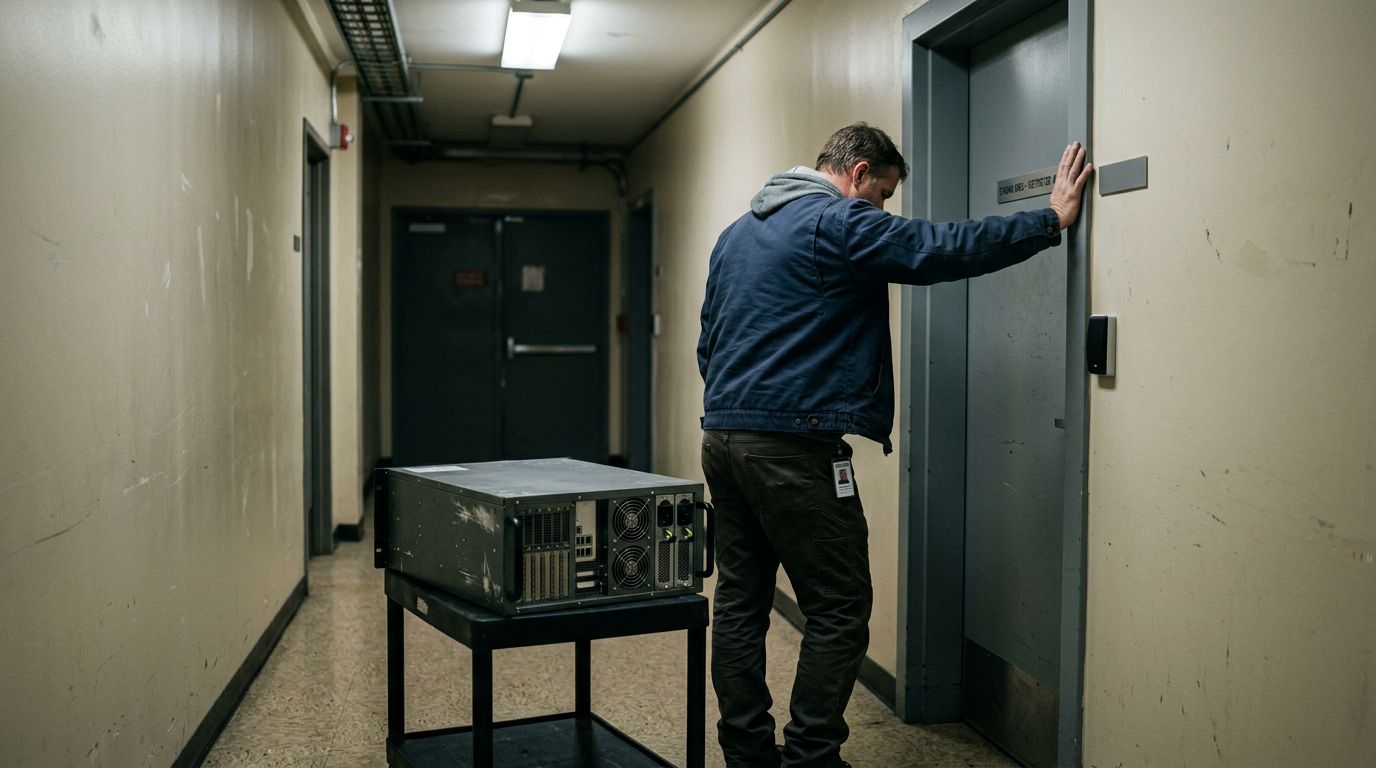
We are seeing fewer “world-changing” demos and more quiet shutdowns. The founders who were raising seed rounds on a single prompt six months ago are now pivoting to “infrastructure” or quietly returning capital. The silence isn’t a lack of activity. It is the sound of an entire industry hitting a concrete wall at a hundred miles an hour. The easy part is over, and the bruising reality of making this technology actually work has arrived.
The consensus view
If you ask the average venture capitalist or industry observer what is happening, they will tell you we are in a “digestion phase.” The narrative is that the market is simply taking a breath to integrate the massive leaps in capability we saw over the last year. They argue that enterprises are slow to move, and we are just waiting for the procurement cycles to catch up with the innovation cycles. The belief is that the technology is ready, but the world is just too slow to adopt it.
This view is comforting because it suggests the problem is external. It frames the slowdown as a bureaucratic hurdle rather than a technical one. It implies that the only thing standing between us and the promised land of automated abundance is a few signed contracts and some better UI. It allows builders to keep building the same things, confident that the customers will eventually “get it.” It maintains the assumption that the core hypothesis of the current AI wave—that more intelligence automatically equals more value—is still intact.


The pivot
The consensus is wrong. We are not waiting for the world to catch up. We are waiting for the software to actually work. The industry is not pausing for breath; it is stalling because we have hit the “reliability ceiling.” The silence you hear is the collective realization that probabilistic models are terrible at executing deterministic business logic, and nobody has a clean fix for it yet. The “digestion” theory is a mask for a much scarier truth: the gap between a demo and a product is not just engineering effort. It is a fundamental architectural mismatch.
The thesis for this week is that the “stochastic tax” has finally come due. For two years, we treated hallucinations and inconsistency as bugs to be ironed out with better prompting or larger context windows. Now, as teams try to push these systems into production for high-stakes workflows, they are finding that the error rate isn’t a bug. It is a feature of the architecture. The pause in the market isn’t about lack of demand. The demand is insatiable. The pause is about the lack of supply of reliable, trustworthy agents that don’t require a human babysitter. We have built engines that are incredibly powerful but occasionally explode, and we are wondering why nobody wants to put them in a commuter car.
Evidence and mechanism
Look at the behavior of the technical teams rather than the marketing departments. In the early days, the strategy was simple: prompt the model, parse the output, ship the feature. Today, the most sophisticated teams are doing the opposite. They are dismantling their reliance on raw model intelligence. They are surrounding their LLMs with massive, complex scaffolding of traditional code, guardrails, and verification steps. The “AI” part of the AI application is shrinking, becoming a smaller and smaller component of the total stack. We are seeing a retreat from “end-to-end” neural networks back to hard-coded logic where the model is treated as a dangerous, untrusted component that must be contained.
The mechanism of this failure is the non-linear cost of errors. In a chat interface, a wrong answer is a minor annoyance. The user regenerates the response and moves on. In an agentic workflow—where the model is supposed to perform a chain of ten actions—a 5% error rate at each step is catastrophic. By the time you get to the end of a ten-step chain, the probability of success is mathematically ruinous. This is why we see so many “copilots” but almost no “autopilots.” The math of compounding probabilities kills the autonomous agent before it even leaves the terminal.
We also see this in the unit economics of the current generation of startups. The promise was that AI would bring the marginal cost of service delivery to zero. The reality is that to make these models reliable enough for enterprise use, you have to chain so many calls, run so many verifications, and employ so many human reviewers that the cost structure looks more like a consultancy than a software company. The “gross margin” of AI software is being eaten alive by the need for reliability. You can have cheap AI, or you can have reliable AI, but right now, you cannot have both.
The feedback loop from enterprise pilots is another glaring signal. Companies ran thousands of experiments in the last year. The conversion rate of those pilots to full-scale production deployments is abysmal. It is not because the enterprises are luddites. It is because the pilots failed the “trust test.” A CFO cannot deploy a system that hallucinates a number 1% of the time. A legal team cannot use a contract reviewer that misses a clause 1% of the time. The “99% accuracy” benchmark, which sounds amazing in a research paper, is a failing grade in production operations. The silence in the market is the sound of thousands of pilots quietly failing that test.
Even the model labs seem to have hit a wall in terms of how they sell their utility. We have moved from “this model can do anything” to “this model is good for specific reasoning tasks.” The shift toward “reasoning” models that “think” before they speak is a direct admission that the previous paradigm of rapid-fire token prediction was insufficient for complex work. But even these new reasoning models introduce a new friction: latency. Waiting ten seconds for an answer breaks the flow of many interactive applications, forcing developers to choose between a dumb, fast bot or a smart, slow one. Neither is a great product experience.
Finally, look at the talent migration. The “prompt engineer” is dead. The new coveted role is the “evals engineer.” The industry has realized that you cannot improve what you cannot measure, and measuring the performance of a probabilistic system is a nightmare. Teams are spending more time writing tests for their AI than writing the AI itself. This shift from “creative prompting” to “rigorous testing” marks the end of the honeymoon phase. It is the boring, unsexy work of industrialization, and it has frozen the hype cycle in its tracks.
Consequence
The immediate consequence of this “reliability ceiling” is a wash-out of the thin wrapper companies. If your product is just a UI over a raw model API, you are selling a probabilistic product in a deterministic market. You will be churned out as users realize they cannot trust the tool for real work. The capital that was flowing into these application-layer bets will dry up—and is already drying up—forcing a mass extinction of the “AI for X” startups that don’t own a proprietary evaluation or grounding loop.
We will see a return to “vertical” integration. To make a model reliable in a specific domain, like law or medicine or structural engineering, you cannot just prompt a general-purpose model. You need to constrain it, ground it in proprietary data, and wrap it in domain-specific logic. This favors incumbents who own the data and the workflow, or new startups that are willing to do the hard, unscalable work of building deep vertical solutions. The dream of the “universal assistant” that can do everything is on hold. The future belongs to the “narrow specialist” that can do one thing without lying.
For the builders, the era of the “weekend prototype” is over. The bar for shipping has moved. It is no longer enough to show a cool demo video on social media. You have to prove reliability at scale. This raises the barrier to entry significantly. We are moving from a software market, where two guys in a garage could disrupt an industry, to something that looks more like a biotech market, where you need deep expertise, significant capital, and a long R&D cycle to bring a viable product to market. The “easy money” phase is done.
Close
The silence isn’t the end of the AI boom. It is the beginning of the AI industry. We are done playing with magic tricks. Now we have to build the machinery.