
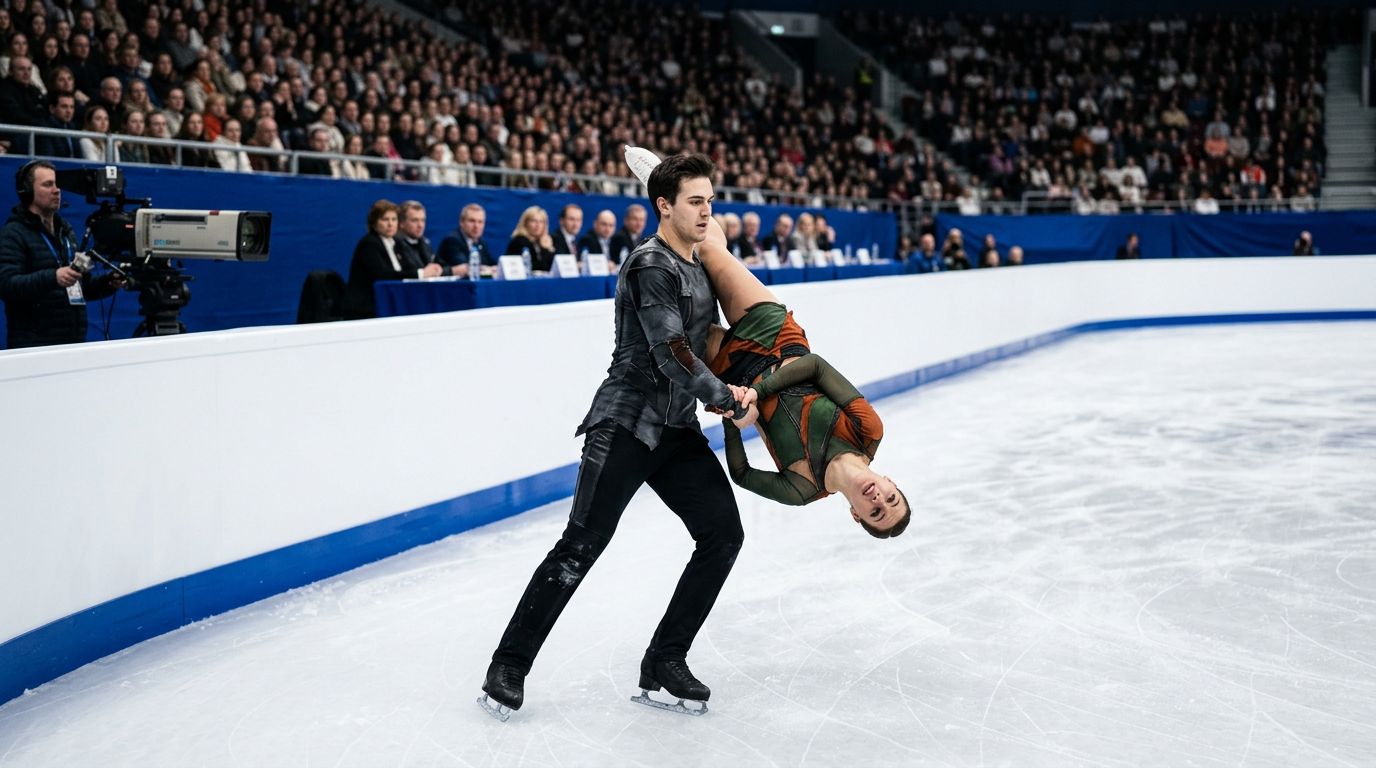
The Olympics are usually the peak of human achievement. We watch for the years of sweat, the broken bones healed, and the sheer physical reality of it all. But when Czech ice dancers Kateřina Mrázková and Daniel Mrázek stepped onto the ice for their rhythm dance, the most notable part of the performance wasn’t a lift or a spin. It was the backing track—a synthetic voice singing a song that didn’t quite exist, raising an uncomfortable question about where human effort ends and automation begins.
Key Takeaways
- Czech ice dancers Kateřina Mrázková and Daniel Mrázek used AI music for their Olympic routine.
- The current rhythm dance theme is the music and dance styles of the 1990s.
- The duo’s program featured an AI-generated track and “Thunderstruck” by AC/DC.
The category was “Rhythm Dance,” and the mandatory theme for this season is the 1990s. Most teams picked classics like the Spice Girls or Lenny Kravitz. The Czech siblings chose a different route. Their routine mashed up AC/DC’s very real “Thunderstruck” with a track officially listed by the International Skating Union as “One Two by AI (of 90s style Bon Jovi).”
This wasn’t an accident or a licensing mistake. It was a deliberate choice, and not their first one. Earlier in the season, they used a different AI track that blatantly ripped lyrics from the New Radicals hit “You Get What You Give.” After backlash, they swapped it for the Bon Jovi-style track used in the Olympics. That track also lifted lyrics, this time from Bon Jovi’s “Raise Your Hands.”
The big deal
This brings the muddy ethics of generative AI to a venue that usually celebrates human authenticity. We are used to seeing AI art debates on social media, but seeing it at the Olympics is different. It suggests that AI-generated content is moving from a novelty to a standard utility, even in high-stakes artistic competitions.


It also highlights a massive blind spot in regulations. The governing bodies of sport likely never anticipated they would need to regulate the “reality” of the music. If the skaters are judged on human performance and artistic interpretation, using a machine-generated track that mimics human emotion complicates the scorecard.
How it works
Generative music tools are essentially pattern-matching engines. They do not understand melody or poetry.
Think of it like a parrot that has listened to millions of conversations. If you ask the parrot to sound like a pirate, it doesn’t understand what a pirate is. It just repeats the words and sounds it has heard most often in pirate movies.
These AI models are trained on massive libraries of existing music. When asked to create a “90s rock song,” the software predicts which sounds and words historically follow one another in that genre. Because the training data includes real copyrighted songs, the AI often spits out identical lyrics or melodies, treating them as just another statistical probability rather than someone else’s property.
The catch
The main issue is plagiarism. The technology works by mimicking existing art so closely that it often crosses the line into copying. The duo’s previous track included the specific lyric “Every night we smash a Mercedes-Benz,” which is unique to the New Radicals. The Olympic track sounded enough like Bon Jovi to be recognizable, yet synthetic enough to feel uncanny.
There is also the issue of quality. While the track passed for a rhythm accompaniment, it lacked the emotional resonance of the human-made music it was paired with. It creates a jarring contrast when a real song like “Thunderstruck” kicks in, highlighting the flatness of the generated portion.
What now?
The skaters have finished their event, but the precedent is set. The International Skating Union currently has no rules explicitly banning AI music, meaning we might see more of this as teams look to cut costs or avoid complex licensing deals.
If you are a creative professional, this is a signal that “good enough” synthetic media is now acceptable on the world stage. Watch to see if the major record labels—who own the rights to the songs these AIs are mimicking—file complaints against the sports organizations hosting these performances.