
It is rare for a business to generate $35.6 billion in three months and get punished for it. Amazon Web Services just posted its best growth numbers in over three years, proving the AI boom is finally paying real cash dividends to the cloud giants. But instead of a victory lap, the company’s stock immediately dropped 10% in after-hours trading. The market looked past the revenue record and saw a massive bill coming due.
Key Takeaways
- AWS recorded $35.6 billion in Q4 2025 revenue, a 24% year-on-year increase.
- The cloud business reached an annual revenue run rate of $142 billion.
- Amazon shares fell 10% in after-hours trading following the Q4 financial results.
Amazon’s cloud division is now massive enough to distort the gravity of the tech industry. In the final quarter of 2025, AWS brought in $35.6 billion, a 24% jump from the year before. This is the fastest growth the division has seen in thirteen quarters. CEO Andy Jassy noted that growing at this speed is much harder when you are already generating $142 billion a year compared to smaller competitors starting from a lower base.
The big deal
This report confirms that the infrastructure phase of the AI cycle is still accelerating. Companies are writing huge checks to rent the computing power needed to run modern artificial intelligence. AWS secured new agreements with major players like Salesforce, BlackRock, and the U.S. Air Force. These are not experimental pilots; they are large-scale deployments.
It also proves a theory about “data gravity.” Jassy pointed out that customers want to run AI models right next to where they store their boring, everyday business data. Since AWS already holds that data for millions of companies, they become the default choice for running new AI tools. This advantage helped increase their operating income to $12.5 billion for the quarter.


How it works
Cloud computing is essentially renting someone else’s computer over the internet.
Think of it like a massive commercial kitchen that you rent by the hour. Instead of building your own oven and buying your own pots to bake one cake, you just pay to use their fully stocked facility when you need it.
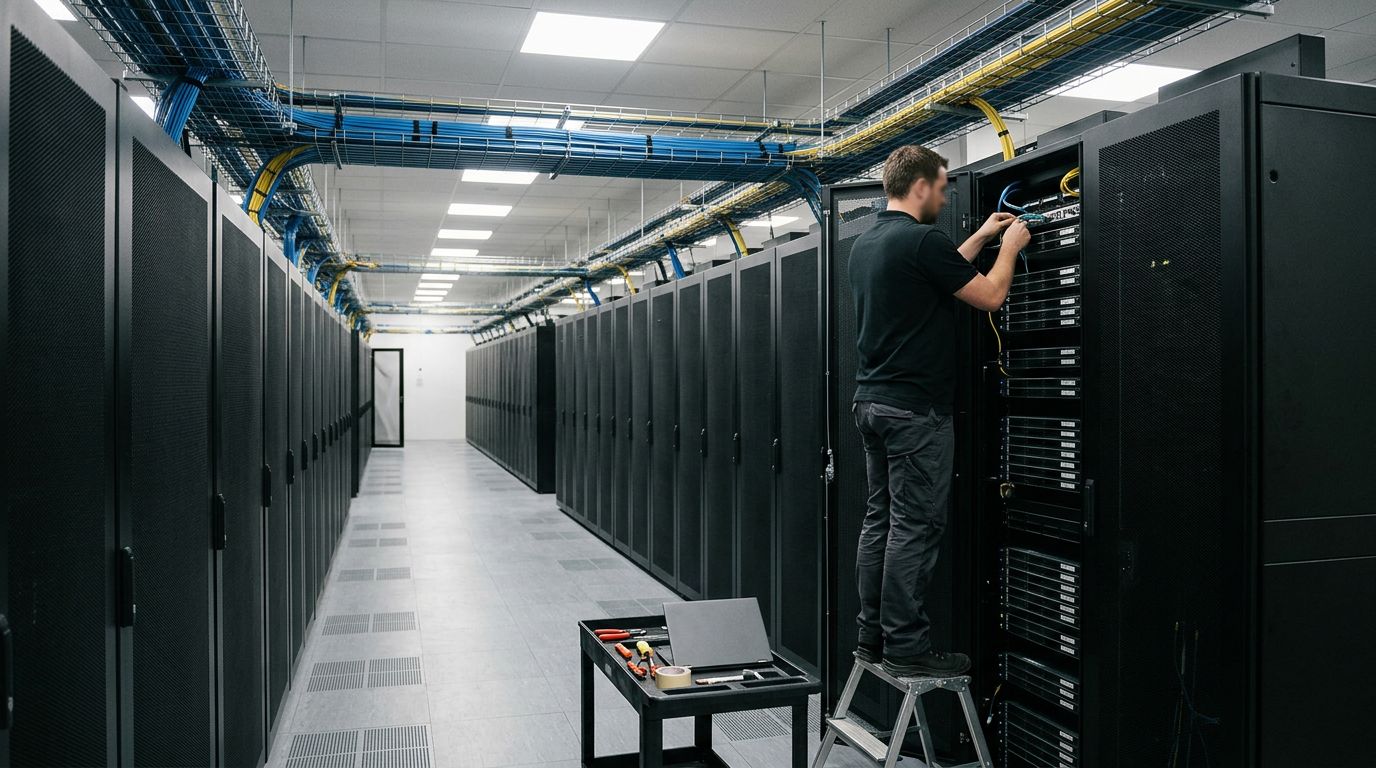
AWS builds giant data centers full of servers—the “kitchens”—and companies pay to run their software on them. Now, those companies are renting expensive, specialized AI processors in those same data centers to process huge amounts of information without having to buy the hardware themselves.
The catch
Success is expensive. The main reason Amazon’s stock fell despite these huge earnings is the cost of doing business. The company plans to boost its capital expenditures—spending cash on physical assets—to build more data centers and buy more chips. Investors often dislike high spending because it eats into short-term profits.
There is also the issue of expectations. While the cloud unit performed well, the overall company missed Wall Street’s targets for earnings per share. The market is currently very sensitive to how much money these tech giants are burning to chase AI dominance.
What now?
Amazon is doubling down on physical infrastructure. In the fourth quarter alone, they added over a gigawatt of power capacity to their data center network. That is roughly enough energy to power 750,000 homes.
If you run a business on AWS, expect more AI tools to appear in your dashboard as they try to lock you deeper into their ecosystem. Watch the next quarter to see if this massive spending spree results in sustained profits, or if investors get even more nervous about the bill.